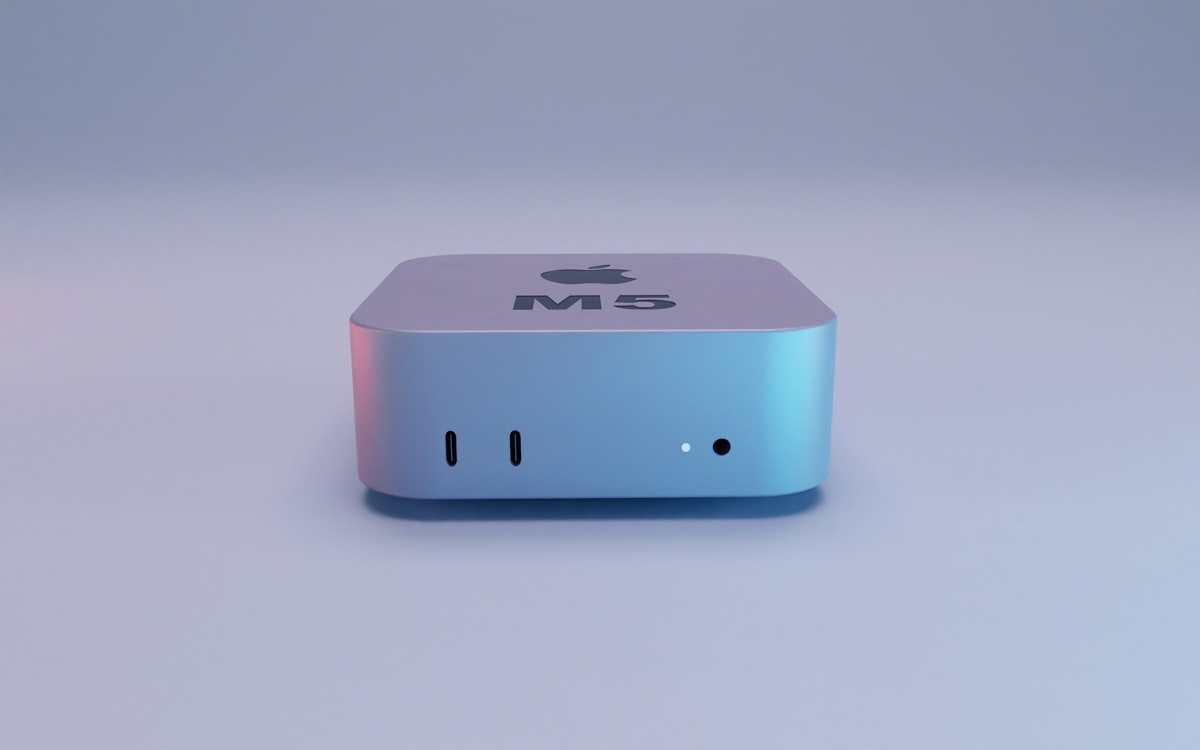
Is Renting a Mac Mini M4 Worth It? 2026 Pricing, AWS Comparison, and What to Watch For
Renting a dedicated Mac mini M4 in 2026 costs $48–$196/month from boutique cloud-Mac providers, $119–$399/month from enterprise host MacStadium, or roughly $886/month if you keep an AWS EC2 mac-m4.metal host allocated around the clock. For solo developers and small teams doing fewer than 80 build-hours a month, renting beats buying a $599 unit outright—but the boutique market is crowded, largely undifferentiated, and worth vetting before you hand over App Store signing credentials.
1. Three decision pain points: why the monthly sticker price misleads
- Up to 20x spread on identical specs: Base Mac mini M4 (10-core CPU/GPU, 16GB/256GB) lists from $48/month to ~$886/month on AWS—lowest price alone ignores regions, SLA, and compliance.
- License rules define the business model: Apple requires 24-hour minimum whole-machine exclusive leases—cloud Mac cannot bill like per-second compute; misunderstanding this leads to surprise AWS Dedicated Host charges.
- Homogeneity and white-label risk: Many boutique sites share identical layouts and copy; price gaps may not reflect service quality—compliance matters more than margin when developer certificates are involved.
2. Why a wave of near-identical "cloud Mac mini" providers showed up in 2026
Cloud Mac hosting isn't new—MacStadium has run bare-metal Mac colocation for over a decade, and AWS launched EC2 Mac instances in 2020. What's new in 2026 is the sheer number of small providers selling the exact same spec sheet: 10-core CPU / 10-core GPU / 16GB unified memory / 256GB SSD Mac mini M4, for wildly different prices. MacRent.cloud, Neolo, My Remote Mac, RentAMac, Macly, and VmMac repriced around the same window, alongside Asia-based operators (VNCMac, RunMini, TerminalMac, MeshMini) targeting teams that need real Apple-hardware builds outside their home region.
Two demand drivers stack. First, the long-standing App Store pipeline still effectively requires compiling and signing on genuine Apple hardware under Apple's licensing terms. Second, M4 unified memory made a $599 Mac mini viable for local LLMs (Ollama, Llama 3, Mistral) and AI coding agents—several providers now advertise the same hardware for "OpenClaw-style agent hosting" bolted onto their iOS CI/CD pitch.
3. What providers actually charge in August 2026
All prices below are self-reported on each provider's pricing page as of August 2026—not independently audited—so treat them as directional, not final quotes.
| Provider | Category | Base M4 config | Monthly price | Regions |
|---|---|---|---|---|
| MacStadium | Enterprise colo, Apple partner | 10-core / 16GB / 256GB | From $149/mo | US |
| AWS EC2 Mac | Hyperscaler bare metal | 10-core / 24GB | $1.23/hr → ~$886/mo continuous | US East / US West |
| MacRent.cloud | Boutique cloud Mac | 10-core / 16GB / 256GB | $119/mo | Undisclosed |
| Neolo | Boutique cloud Mac | 10-core / 16GB / 256GB | $99.99/mo | US |
| RentAMac.pro | Boutique cloud Mac | 10-core / 16GB / 256GB | $48/mo ($2/hr, 4hr min) | Undisclosed |
| VmMac | Boutique cloud Mac | 10-core / 16GB / 256GB | $103.9/mo | Singapore, Tokyo, Seoul, HK, US East |
| VNCMac / RunMini / TerminalMac / MeshMini | APAC bare metal | 10-core / 16GB / 256GB | ~$96–$196/mo | Singapore, HK, Japan, Korea, US |
Takeaway: identical hardware spans nearly 20x monthly ($48 vs ~$886), and AWS—the "official" cloud giant—is one of the most expensive options here, not the cheapest—a direct consequence of Apple's licensing.
4. The technical reason cloud Mac pricing looks like short-term rentals
Under Apple's "Leasing for Permitted Developer Services" clause in the macOS Software License Agreement, any provider leasing Apple-branded hardware must meet three conditions: each lease runs a minimum of 24 consecutive hours; the lessee has sole and exclusive control during that period; virtualization is capped at a single instance per licensed copy as a provisioning tool—providers cannot slice one physical Mac into multiple paid virtual tenants.
That explains why AWS bills EC2 Mac by Dedicated Host allocation—stopping the instance doesn't stop the meter; you must release the host, and not before 24 hours. Boutique providers price in daily, weekly, or monthly blocks for the same reason. Once you understand this rule, the market's "short-term apartment rental" shape stops being confusing.
Unified memory is why the AI-agent pitch rides on the same chip: CPU, GPU, and Neural Engine share one pool, so 16GB configs run quantized models up to roughly 13B parameters without a discrete GPU—why marketing expanded from "iOS build server" to "AI agent hosting" on the same product page.
5. Buy vs rent vs enterprise colo vs hyperscaler: how options stack up
| Option | Typical cost | Pros | Cons |
|---|---|---|---|
| Buy Mac mini M4 (16GB/256GB) | ~$599 upfront + power/maintenance | Cheapest long-run above ~80 build-hours/month | High upfront, single point of failure, no multi-region |
| Boutique cloud Mac | $48–$196/mo | Flexible billing, multi-region, minutes to provision | Crowded market; vetting is on you |
| MacStadium | $119–$399/mo | Apple-partner status, enterprise SLA | Pricier than boutique; M4 inventory tight in 2026 |
| AWS EC2 Mac | $1.23/hr; ~$886/mo continuous | Native AWS integration; Savings Plans up to 44% | 24-hour minimum; 2 US regions; highest always-on cost |
| GitHub-hosted macOS runner | From $0.062/min | Zero ops, usage-based | macOS rate 10x+ Linux; expensive at scale |
VmMac publishes breakeven math: owning pays off against ~$103.9/month rental once you sustain roughly 80 active build-hours/month for 24+ months, after power and admin time. That's a single vendor's blog figure, not an independent audit—but directionally consistent with market pricing.
6. What to watch out for before you sign up
- Homogeneity is a red flag: Identical spec sheets, layouts, and copy ("10-minute deployment," "6 global regions") suggest shared white-label infrastructure—check registration, support, and refunds before comparing price alone.
- Licensing compliance is unverifiable from outside: Apple requires sole exclusive use, but you cannot confirm a small provider isn't oversubscribing hardware. For workflows touching developer certificates, favor longer track records and disclosed infrastructure over the cheapest list price.
- "80% cheaper than AWS" benchmarks the most expensive option: AWS EC2 Mac optimizes for AWS-native integration, not lowest cost. Fairer baselines are MacStadium or self-owned hardware.
7. The bigger picture: two trends converging on one small market
This niche sits where two stories intersect. First, shipping iOS and macOS apps still requires genuine Apple hardware somewhere in the pipeline—a constraint vendors rent around, not engineer away. Second, 2026 CI/CD cost anxiety: GitHub's proposed $0.002/minute "platform charge" on self-hosted Actions runners in December 2025 was postponed indefinitely after backlash—a reminder that outsourcing your build cost structure to a hosted platform's billing carries its own risk. A cloud Mac mini you control SSH keys to sits at that intersection.
An underreported angle: Asia-based operators (VNCMac, RunMini, TerminalMac, MeshMini) explicitly serve APAC teams shipping overseas through Singapore, Hong Kong, Japan, and Korea nodes—often undercutting MacStadium list prices by 20–40% on paper, with little US/EU press coverage.
8. Five steps: select and connect a cloud Mac mini M4 rental
- Measure monthly hours and regions: Under ~80 build-hours/month or multi-region needs favor renting; 24+ months heavy single-site use favors buying.
- Compare quotes and vet providers: Benchmark the table above; verify registration, refunds, and live support—not just lowest price.
- Confirm Apple license boundaries: Whole-machine exclusive lease, 24-hour minimum; avoid new brands when certificates are involved.
- Validate SSH and VNC:
ssh user@host, runxcodebuildand rsync; VNC for GUI latency acceptance. - Model cash flow: Stop when the project ends; revisit buying only above 80 hours/month for 24+ months.
9. FAQ
Is renting a Mac mini legal under Apple's license? Yes when providers follow Apple's written rules: whole-machine leases, 24-hour minimum, sole exclusive control. Risk is backstage compliance, not renting itself.
How much for CI/CD in 2026? Boutique $48–$196/month; MacStadium $119–$399/month; AWS ~$886/month continuous Dedicated Host.
Is AWS EC2 Mac cheaper? No for continuous use—several times more than most boutique equivalents at full allocation.
Local AI models or coding agents? Yes—16GB unified memory runs ~13B-parameter quantized models natively.
Buy or rent for iOS in 2026? Rent under ~80 build-hours/month or multi-region; buy for sustained 24+ month high-volume single-location use.
Sources: Provider pricing pages (August 2026); MacStadium pricing; AWS EC2 Mac docs; Apple macOS SLA "Leasing for Permitted Developer Services"; GitHub Actions pricing and December 2025 self-hosted runner fee coverage. Verify current pricing and inventory before purchasing.
Summary: after the license rules, the real question is which machine and how long
The 2026 cloud Mac mini market boils down to: up to 20x monthly spread on identical specs, AWS often most expensive at continuous allocation, boutique providers crowded but multi-region-friendly, buying wins only past ~80 hours/month for 24+ months. You now have Apple's 24-hour exclusive-lease rule, pricing tables, and three pitfalls—the next step is landing on verifiable bare-metal exclusivity, stable SSH/VNC, and predictable monthly cash flow.
Buying and some white-label rentals lock cash upfront, create single-point ops burden, and carry unverifiable oversubscription risk; GitHub-hosted runners bill per minute and scale poorly. If you need multi-region iOS CI/CD, OpenClaw-style AI agents, or always-on builds across APAC and the US, SFTPMAC remote Mac rental offers 100% genuine physical Mac mini hardware, full root access, and datacenter SLA with SSH/rsync artifact sync and VNC—better suited than the cheapest white-label page for production workflows involving developer certificates and signing keys.