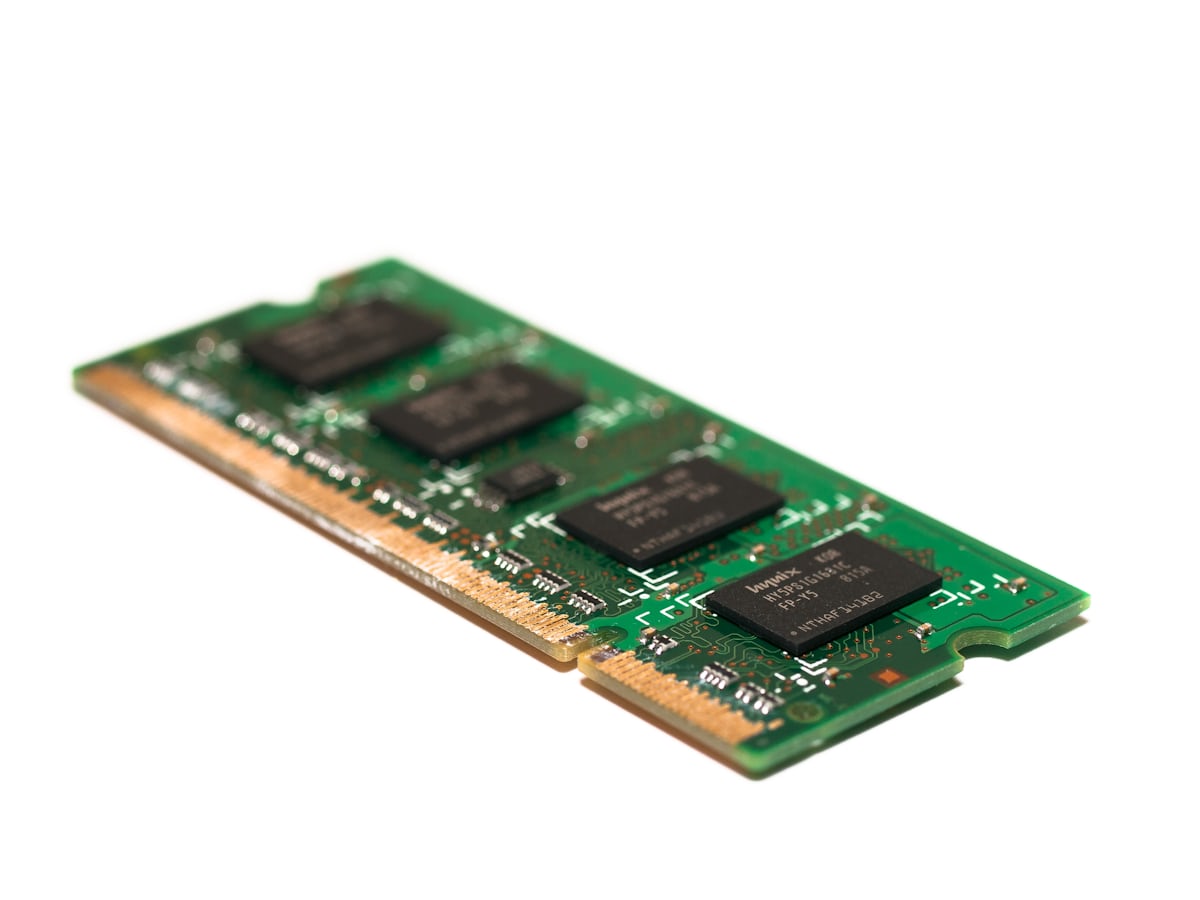
Is Apple's Chinese Memory Chip Gambit Already Dead? Inside the CXMT Price Standoff
Apple reportedly asked Chinese memory maker ChangXin Memory Technologies (CXMT) for a mobile DRAM quote below what Samsung and SK Hynix charge — and got turned down flat, with CXMT holding prices at or above the Korean suppliers' own rates, according to Korean outlet DigitalDaily and China Fund News reports circulating since August 5–6, 2026. Neither Apple nor CXMT has confirmed the negotiation publicly. If accurate, it marks the first time in two decades that Apple's classic “bring in a cheaper Chinese alternative to scare incumbent suppliers into a discount” playbook has visibly failed — not for political reasons alone, but because the intended bargaining chip did not need Apple's business badly enough to play along.
1. Three decision traps: rumor truth, leverage premises, politics
- Treating a rumor chain as confirmed fact: Coverage traces back to DigitalDaily and China Fund News citing unnamed sources. Neither Apple nor CXMT has confirmed prices or deal terms. Decisions based only on this thread can reverse quickly.
- Still modeling Chinese suppliers as automatic discount levers: Apple's BOE and Luxshare plays worked when the alternate needed Apple's order. CXMT already holds high-price, multi-year contracts and a record STAR Market IPO — the premise has changed.
- Pricing the BOM while ignoring Section 1260H: Even a commercial win collides with Pentagon listings and a bipartisan Senate letter demanding a public non-use commitment by August 21, 2026.
2. What is actually being reported
For years, Apple has managed component costs by qualifying a second or third supplier and using that leverage to push incumbents lower — it did this with BOE against Samsung Display on OLED panels, and with mainland assemblers like Luxshare to reduce dependence on Foxconn. Facing a historic DRAM price surge in 2026, Apple applied the same logic to memory: get CXMT (and separately, YMTC for NAND) qualified as suppliers, then use that as leverage in contract talks with Samsung, SK Hynix, and Micron.
According to the reports, that is where the plan stalled. Apple pushed CXMT for an LPDDR5X mobile DRAM quote undercutting Samsung and SK Hynix. CXMT refused, quoting prices at or above the two Korean firms' rates for comparable specs — effectively declining to play the role of “cheap alternative” that Apple needed. The reported reason is not that CXMT could not compete; it is that CXMT did not need to.
3. Timeline: from quiet qualification to a public standoff
| Date | Event |
|---|---|
| 2022 | Apple previously pursued a supply deal with YMTC; Senator Schumer led efforts to block it, and YMTC was later added to the Commerce Department's Entity List |
| January 2024 | The Pentagon adds YMTC to its Section 1260H list of Chinese military-linked companies |
| 2025 | The Pentagon adds CXMT to the same 1260H list |
| May 17, 2026 | CXMT's parent company, CXMT Corp, moves its Shanghai IPO review status from “suspended” back to “under inquiry,” accelerating its listing |
| June 25, 2026 | Apple raises global prices on MacBook, iPad, and other hardware by roughly 20%, citing sharply higher memory and storage chip costs |
| June 27, 2026 | The Financial Times reports Apple is lobbying the US government to approve sourcing memory from CXMT; CEO Tim Cook reportedly raised the issue directly with Treasury Secretary Scott Bessent |
| July 2026 | CXMT signs a five-year supply deal worth up to $7 billion with ByteDance; a separate deal worth up to $3 billion with Tencent was signed in June |
| July 27, 2026 | CXMT Corp lists on Shanghai's STAR Market at 8.66 yuan/share, opens up more than 465% on day one, and hits a market cap above 3.3 trillion yuan — the largest IPO in STAR Market history and briefly China's most valuable listed company |
| July 29–30, 2026 | A bipartisan group of US senators led by Chuck Schumer and Jim Banks sends Apple CEO Tim Cook a letter demanding a public commitment by August 21 not to use CXMT or YMTC chips |
| August 5–6, 2026 | Korean and Chinese financial media report the Apple–CXMT price negotiation has collapsed, with CXMT refusing to undercut Samsung and SK Hynix |
4. Key facts at a glance
| Metric | Figure |
|---|---|
| CXMT Q1 2026 revenue | 50.8 billion yuan, up 719% year-over-year (company-reported; treat with caution pending independent audit) |
| CXMT H1 2026 revenue guidance | 110–120 billion yuan, up 612–677% YoY |
| CXMT H1 2026 net profit guidance | 50–57 billion yuan (vs. a 4.08 billion yuan net loss a year earlier) |
| Global DRAM market share | Samsung, SK Hynix, and Micron control over 90% combined; CXMT holds roughly 7%, ranking #4 globally (Counterpoint data) |
| CXMT Corp IPO size | ~57.9 billion yuan (up to 66.6 billion yuan with over-allotment) — the largest-ever STAR Market IPO, surpassing SMIC's 2020 record |
| First-day market cap | ~3.3 trillion yuan, briefly the highest of any China A-share company |
| CXMT's major long-term customers | Huawei and Xiaomi (capacity locked through 2027); ByteDance ($7B/5-year deal); Tencent ($3B deal) |
| DRAM price outlook | TrendForce forecasts Q3 2026 contract prices rising 13–18% quarter-over-quarter amid tight supply |
| US regulatory exposure | Both CXMT and YMTC are on the Pentagon's Section 1260H list; NDAA Section 5949 bars federal agencies from buying products with CXMT/YMTC chips starting December 2027 |
Source: China Fund News, 21Jingji, Counterpoint Research, TrendForce, CXMT Corp's IPO prospectus and listing filings, US Senate Foreign Relations Committee (all published May–August 2026; company-reported figures flagged as such).
5. Why CXMT could afford to say no
5.1 Its capacity was already sold out — to Chinese buyers who do not need a discount pitch
This is the most direct explanation. CXMT's output is not just tight because of a general shortage — Huawei and Xiaomi have reportedly locked up capacity through long-term, high-price contracts running through 2027, and ByteDance and Tencent added five- and multi-year deals worth up to $7 billion and $3 billion respectively within the past two months. There is no idle capacity waiting for Apple, and no reason to discount for a customer that has not proven, the way domestic buyers already have, that it will place large orders at current prices.
5.2 Export controls accidentally became a price floor, not a ceiling
CXMT is barred from EUV lithography tools under US export restrictions and has to rely on older DUV equipment instead. A cost analysis cited by Tech Times estimates that producing the same DRAM output on DUV requires roughly 30% more wafer starts than an EUV-equipped competitor would need. Matching Samsung and SK Hynix prices is closer to CXMT's cost floor than a strategic choice — the export controls designed to slow China's chip industry may have inadvertently handed CXMT a legitimate excuse not to discount.
5.3 The broader DRAM market flipped from buyer-friendly to seller-friendly
Samsung, SK Hynix, and Micron are all reallocating capacity toward higher-margin HBM chips for AI infrastructure, tightening supply of standard DRAM in the process. TrendForce expects Q3 2026 contract prices to rise another 13–18% quarter over quarter. In an industry-wide shortage, CXMT had little incentive to sacrifice already-signed, high-priced, long-term contracts just to chase a deal with a customer that might never place a comparably large order.
6. How this compares to Apple's past leverage plays
| Case | Timeframe | Apple's “alternative” supplier | Outcome |
|---|---|---|---|
| OLED panels | ~2020 | BOE | Successfully pressured Samsung Display into better pricing terms |
| NAND flash attempt | 2022 | YMTC | Blocked by Senator Schumer; YMTC added to the Entity List; deal never happened |
| Manufacturing diversification | Ongoing | Luxshare and other mainland assemblers | Successfully reduced dependence on Foxconn, improved leverage |
| DRAM (this case) | 2026 | CXMT | Reportedly refused to discount; Apple's leverage chip failed to materialize; Samsung/SK Hynix retain — or gain — pricing power |
The pattern breaks down for a specific reason: Apple's leverage plays worked when the alternative supplier needed Apple's order to prove itself and win market share. This time, CXMT walked into the negotiation already holding high-priced, multi-year contracts from Huawei, Xiaomi, ByteDance, and Tencent, fresh off becoming China's most valuable listed company via a record IPO. It simply did not need Apple's validation the way BOE once did.
7. Controversy: confirmation gaps and the bigger fight
- This is still an unconfirmed rumor chain. Every report traces back to Korean outlet DigitalDaily and China Fund News citing unnamed industry sources; neither Apple nor CXMT has issued a public statement confirming specific prices, negotiation rounds, or deal terms. Treat the specific numbers as industry chatter rather than verified fact until one side confirms them.
- The bigger fight is political. A week before this pricing story broke, a bipartisan group of US senators led by Chuck Schumer and Jim Banks sent Apple CEO Tim Cook a letter demanding a public commitment, by August 21, 2026, not to use CXMT or YMTC memory in any Apple product — including devices sold exclusively in China. Their argument: both companies are on the Pentagon's Section 1260H list, so even a better price would not offset the national security exposure.
- CXMT's state-backing is itself part of the controversy. According to the Senate Foreign Relations Committee's press release, state-owned shareholders held more than 35% of CXMT before its Shanghai listing, and the company only turned profitable once the global memory shortage hit — after years of losses sustained by state capital. Senators explicitly compared this to Beijing's past playbook in steel, batteries, and shipbuilding. Worth noting: CXMT's reported pricing behavior in this negotiation — holding firm rather than undercutting — cuts against that particular narrative, at least for now.
- Apple's actual purchase intent may have always been modest. Bank of America analysts had reportedly flagged that Apple's real goal was using CXMT as psychological leverage in second-half contract talks with Samsung, SK Hynix, and Micron, with actual order volumes expected to stay small. If accurate, the political cost — public lobbying, senator letters, qualification testing now in the open — may already outweigh whatever Apple gains.
8. Why this matters beyond one supplier negotiation
The reason this rumor traveled so fast is that it touches a bigger shift already underway in the global memory industry's balance of power. Chinese suppliers have historically been treated by Western brands as cut-rate alternatives useful mainly for extracting discounts from incumbent Korean and American suppliers. CXMT's reported Q1 revenue growth of over 700%, its trillion-yuan-scale IPO, and its brief run as China's most valuable listed company all point to something different: at least in DRAM, CXMT may no longer need to win business on price the way a challenger typically would.
For Apple, if the reports hold up, the practical consequence is losing a bargaining chip heading into second-half contract renewals with Samsung and SK Hynix — right as both Korean suppliers are shifting capacity toward higher-margin HBM chips for AI data centers, tightening standard DRAM supply further. That dynamic is already visible in Apple's own pricing: the company raised MacBook and iPad prices roughly 20% globally on June 25, 2026, explicitly citing memory and storage cost increases. If Apple's negotiating position weakens further this fall, more cost pass-through to consumers — potentially including the iPhone lineup — is a real possibility worth watching, though nothing has been officially confirmed on that front.
9. Five steps: verify the rumor and model cost impact
- Verify the citation chain and official silence: Line up DigitalDaily, China Fund News, and secondary outlets; mark who originated versus who republished. Until Apple or CXMT confirms, keep every quote in the “rumor” bucket.
- Map regulatory and political deadlines: Put Section 1260H, the August 21 Senate letter deadline, and NDAA Section 5949 (federal procurement ban from December 2027) on the same sheet as commercial price deltas.
- Stress-test “seller's market” with the data table: Q1 growth, H1 guidance, ~7% share, domestic capacity lock-ins through 2027, and TrendForce's 13–18% Q3 contract-price rise should all appear in any BOM scenario.
- Compare leverage plays: Use the OLED/BOE, YMTC, Luxshare, and CXMT matrix to test whether the alternate supplier still needs Apple's validation order.
- Run continuous tracking on a 7×24 remote Mac: Multi-source monitoring and cost models break when a laptop sleeps. Host the workspace on always-on Apple Silicon with SFTP/rsync sync for a reproducible team baseline.
10. Host decision matrix for supply-intel workflows
| Option | Best for | Main limits | Long-cycle intel / BOM modeling |
|---|---|---|---|
| Personal laptop | Reading alerts, drafting a timeline | Sleep interrupts scrapers and batch models | OK for drafts, weak for weekly tracking |
| Generic Linux cloud VM | Scripted fetch and spreadsheet compute | No native macOS / Xcode / Apple toolchain | OK for backend jobs, weak for Mac-native workflows |
| SFTPMAC remote Apple Silicon Mac | BOM models, multi-source intel, team SFTP sync, 7×24 uptime | Plan plan tier and bandwidth | Best fit for turning rumor tracking into a team process |
11. FAQ
Is Apple actually using CXMT chips in its products right now?
No evidence points to that. Reports describe Apple running supplier qualification tests on CXMT components — a standard pre-purchasing step — not placing production orders. And per the latest reports, the price negotiation itself has reportedly broken down, so it is uncertain whether any order will follow.
Why would CXMT turn down a deal with the world's biggest smartphone maker?
Reportedly because it did not need to, not because it could not compete. CXMT's Q1 2026 revenue grew over 700% year-over-year, and its capacity is already committed through 2027 via high-price, long-term contracts with Huawei, Xiaomi, ByteDance, and Tencent. Combined with export-control-driven cost constraints from being locked out of EUV lithography, CXMT had both the order book and the cost structure to hold firm on price.
Why do US senators object to Apple buying cheaper Chinese memory chips at all?
Their objection is about national security, not price. CXMT and YMTC are both on the Pentagon's Section 1260H list of companies designated as supporting China's military modernization. Senators argue that even a price advantage would not offset the risk of Apple becoming reliant on Chinese state-linked suppliers, and that doing so could encourage other US companies to follow suit.
Will this affect iPhone or iPad prices?
Apple already raised MacBook and iPad prices by about 20% in June 2026, citing memory cost increases. If Apple's leverage in memory contract negotiations weakens further, as this episode suggests it might, additional cost pressure on future products is plausible — but no official pricing decision tied to this specific negotiation has been announced.
Is CXMT now a real competitor to Samsung and SK Hynix globally, or still mostly a domestic supplier?
Still mostly domestic for now. CXMT's customer base is concentrated among Chinese device makers and some second-tier international brands; it has not yet broken into the top-tier global supply chains that Samsung, SK Hynix, and Micron dominate. This reported Apple negotiation would have been its closest shot at that so far — which makes its reported refusal to discount for the opportunity a notable signal in itself.
Sources: China Fund News, citing foreign media reports (August 5–6, 2026); DigitalDaily (Korean outlet, original source of the pricing report); Jiemian, 21Jingji, TechNews.tw, Huaxin News coverage (August 5–6, 2026); MacRumors, Tech Times, Compute Report, Asia Business Daily, MK (Korea) English-language coverage (August 5–6, 2026); US Senate Committee on Foreign Relations press release (July 30, 2026); Bloomberg, 9to5Mac, Yahoo Finance; 36Kr, Sina Finance, Xinhua, Economic Information Daily coverage of CXMT Corp's IPO and listing (May–July 2026); Counterpoint Research and TrendForce industry data (as cited by secondary media). The “Apple–CXMT negotiation collapse” described here is a rumor relayed by multiple outlets and not officially confirmed by either company.
12. Bottom line: value, limits, and a tracking host
Read as a decision brief, the timeline, data table, and comparison matrix turn the Apple–CXMT rumor into a checkable framework: seller's market, capacity lock-ins, a DUV cost floor, and political landmines explain why the old discount playbook may have failed.
The limits are equally clear: no official confirmation; a long citation chain; and Section 1260H plus the Senate letter mean a commercial price match still may not clear mainstream product use. Procurement or investment calls should wait for confirmation and second-half contract outcomes.
If the next step is weekly multi-source intel and BOM modeling as a team process, a sleeping laptop is the silent failure mode. Host the workspace on an always-on Apple Silicon remote Mac with SFTP/rsync sync. SFTPMAC remote Mac rental gives native macOS compatibility, low-latency collaboration, and 7×24 uptime — a better base for turning supply-chain rumor tracking into reproducible decision support.